- Streaked or shadowed blast pattern
- Abrasive left on the plate instead of recovered
- Shot escaping the blast head
- Dust leaking past the head seals
- Rust or mill scale left after a pass
- Blast wheel noise, heat or oil weep
- Motor or VFD faults
Steel Surface Prep Machine Repair
Legacy Industrial Solutions repairs the machines prepare steel for coating: walk-behind steel blasters that blast and profile steel plate, reservoir and tank liners, steel decks and structural steel. Diagnosis and a written estimate come before any repair begins, workmanship is warranted for 90 days, and machines ship in to our Santa Fe Springs shop from anywhere in the country.
STEEL BLASTING SYMPTOMS WE TRIAGE BY PHONE 
CALL SERVICE LEAD DIRECT(714) 452-9426
CALL (714) 452-9426
Signs a Steel Blaster Needs Repair
A Steel Reservoir, Outside and In
Reservoir work is where steel blasting is easiest to see, because the plate is large enough that every pass shows.
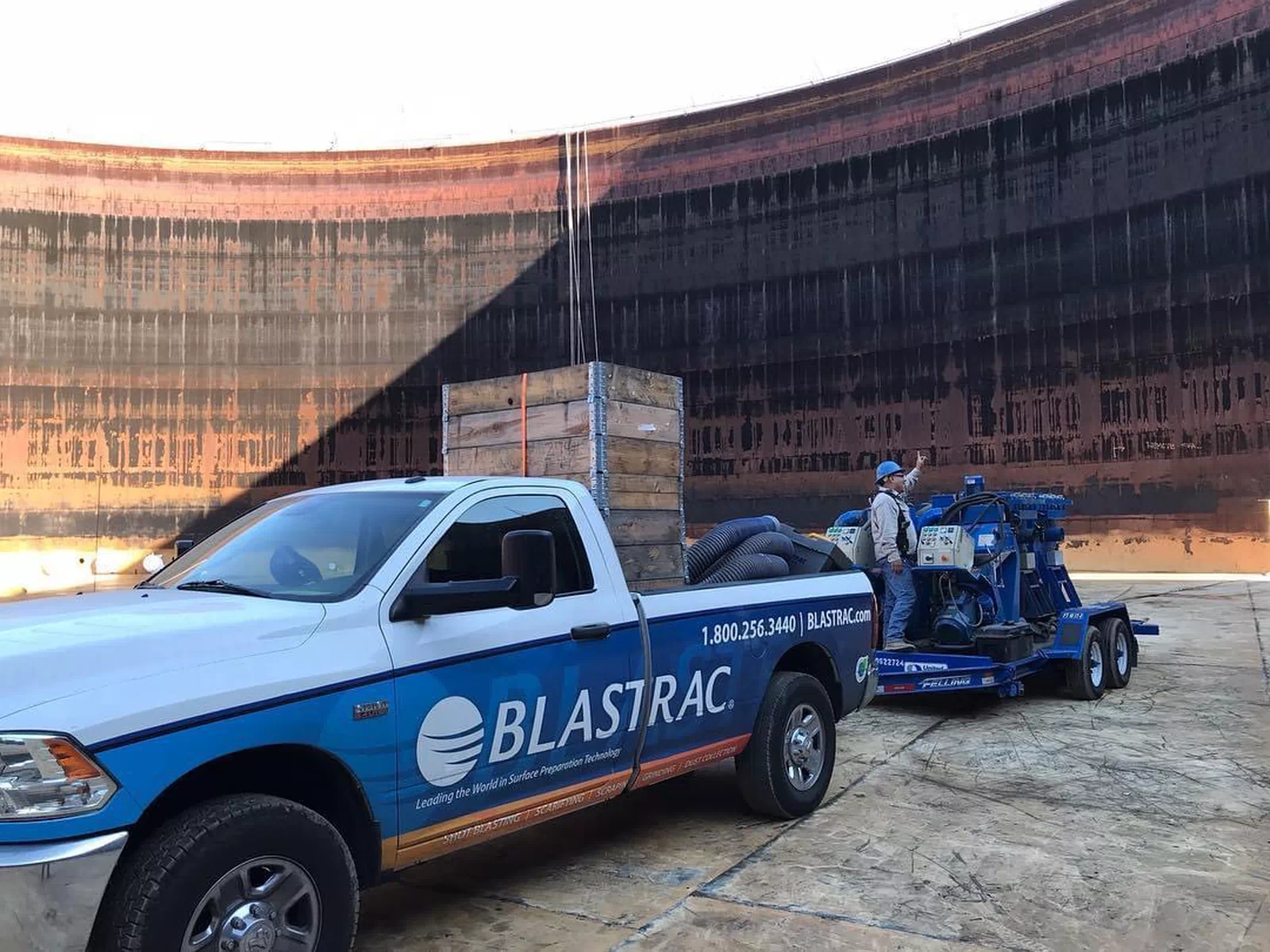
Outside, the machines arrive by truck and trailer at the wall of a steel reservoir and are staged on the apron to be craned in and put to work.
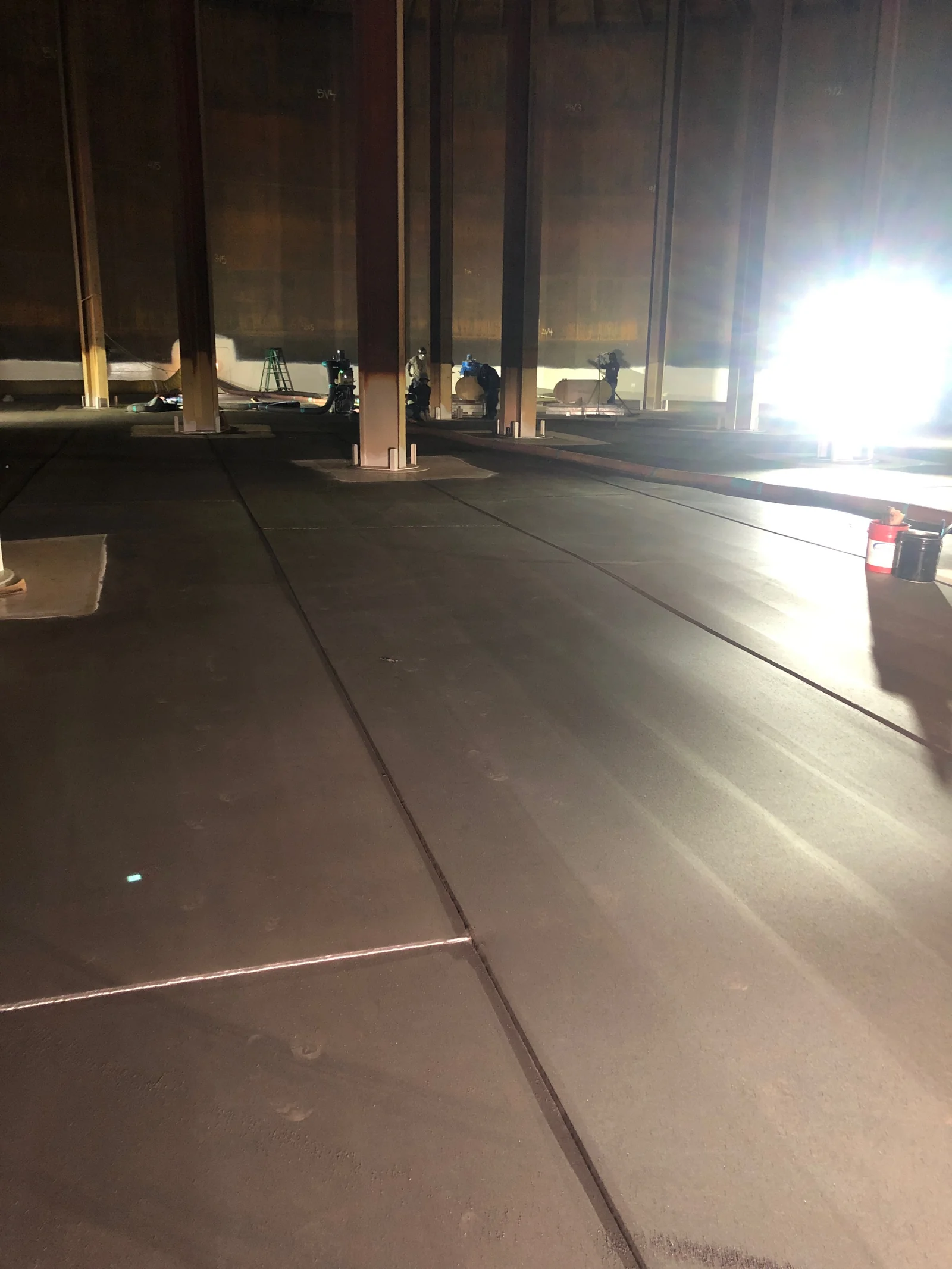
Inside, the steel floor of an emptied reservoir has been blasted to a uniform profile, wall to wall and across every seam. That is the standard a repair has to meet: a machine that merely runs is not finished, it has to hold a pattern across the full pass, recover its abrasive, and keep the dust contained.
Profiling a Steel Deck with a Walk-Behind Steel Blaster
This is the machine most steel jobs arrive on: a walk-behind steel blaster profiling a steel deck inside containment, with the operator trailing the recovery hose. Steel is harder and non-porous compared with concrete, so an inconsistent blast pattern reads immediately as streaks and shadowing that no coating will hide.
That is usually the first symptom, and it has more to do with the machine than to the operator. A good pass has even coverage across the full width of the head, shot returning to the hopper instead of pooling on the deck, and dust staying inside the containment.
What Breaks on Steel Blasting Machines
Steel work punishes the same components as concrete work, only faster: the abrasive does more cutting per hour, the dust is finer, and the finish is visible enough that a small mechanical fault turns into a rejected surface.
Blast Wheel, Blades and Liners
Impeller blades, control cages and wheel liners wear together. A chipped cage or a worn liner throws shot in a lopsided pattern, which on steel shows up as streaks and shadowing rather than an even profile.
 Impeller and blade inspection Control cage replacement Wheel liner re-line
Abrasive Feed and Recovery
Shot has to leave the wheel at a steady rate and come back to the hopper. A blocked feed, a tired separator, worn hoses or a leaking reclaim path all read as weak cleaning and shot left lying on the plate.
Feed valve and metering Separator and screening Reclaim hose and sealsDrive, Motor and Belt
The blast head and the drive motor take the load. Belt tension, pulley wear, bearing noise and motor overload faults all change how the head tracks and how much power actually reaches the wheel.
Belt and pulley replacement Bearing and seal work Motor load testingDust Seals and Collection
Steel dust is fine and it travels. Worn head seals, torn pickup hoses and a clogged collector put dust in the air and grit back onto the surface that was just finished.
Head seal and skirt replacement Hose and fitting repair Collector airflow checkElectrical, Controls and Drives
This line is electric, so every fault ends at the panel. Contactors, VFDs, control boards, cables, interlocks and E-stops are diagnosed on our electrical bench the same way they are on concrete equipment.
VFD and control fault tracing Interlock and E-stop repair Motor, cable and contactor serviceCasters, Chassis and Blast Head Alignment
Abrasive flow and crane handling beat up casters, frames and alignment. A bent chassis rail or a knocked-out blast head throws the pattern off across the working width, and no amount of wheel tuning brings it back.
Caster and wheel repair Chassis and frame inspection Blast head alignment checkNick Has Run This Equipment, Not Just Repaired It
Nick has spent about 20 years in surface preparation, including time with a manufacturer, floor finishing crews, and operator training. He has blasted steel liners and deck plate, prepared tank floors, and worked alongside the crews who own these machines, so the call starts with the job the machine was doing rather than a parts list.
That is what steel customers actually need from a repair shop. A plant maintenance lead, a tank and reservoir contractor, or a steel fabricator calls with a machine that is streaking, leaving a weak profile, or failing to hold a finish before inspection. Knowing how the pass was set up, what abrasive was running and what the plate has to look like afterward tells us where to look first, and it keeps us from quoting a rebuild for a problem the setup caused.
Walk-behind steel blasters on steel plate, liners and decks Closed-circuit blasting that cleans and profiles in one pass Reservoir and tank floors, walls and seams The same machines when they are back on concreteSend the Machine, or Send the Head
Steel blasting machines are heavy, so not every customer ships the whole unit. A blast head, a drive motor, a gearbox or a set of wear parts can travel by freight on its own and come back rebuilt. Tell us the make, model, serial number if you have it, the symptom, and whether you are dropping off in Santa Fe Springs or shipping from out of state.
Make, model and serial number What the machine does wrong, and when it started Photos of the machine, the wear, and the machine tag Drop-off locally, or inbound freight from anywhere in the country PROFILE REJECTED OR MACHINE DOWN?
Get the Machine Back to a Profile You Can Coat
Call the Santa Fe Springs bench now, or send a repair request with the make, model and symptom. We confirm receipt the same day, diagnose before we quote, and keep you informed until the machine is tested and on its way back.
Also see our full equipment repair, parts, and brands we service pages.