Industrial Dust Collector Repair and HEPA Vacuum Service
Legacy Industrial Solutions repairs industrial dust collectors, dust extractors, pulse-jet collectors and HEPA vacuums used on concrete surface preparation machines. If suction has dropped, a filter is bypassing, or the pulse system is not clearing the cartridges, the collector may still run while failing to protect the crew. We diagnose airflow, repair blowers and pulse controls, replace filters and seals, and test before the machine goes back to work.


A Dust Collector That Still Runs Can Still Fail
Grinding, cutting and scarifying concrete generates respirable crystalline silica. Employers are required to control that exposure. A dust collector that has lost airflow, has a clogged or failed filter, or has a failed HEPA filter is a compliance problem and a health problem, not only a productivity problem.
The dangerous part is that the machine can look operational. The motor spins, the pulse board lights up, and the hose is connected. But if suction has fallen, if filter media is torn, or if dust is bypassing around a damaged gasket, the operator may be working without the protection the machine was chosen to provide. That is why airflow diagnosis comes first on every dust collector we service.
We do not assert efficiency percentages or micron figures. We test, inspect and repair so the collector pulls and holds what it was designed to pull and hold.
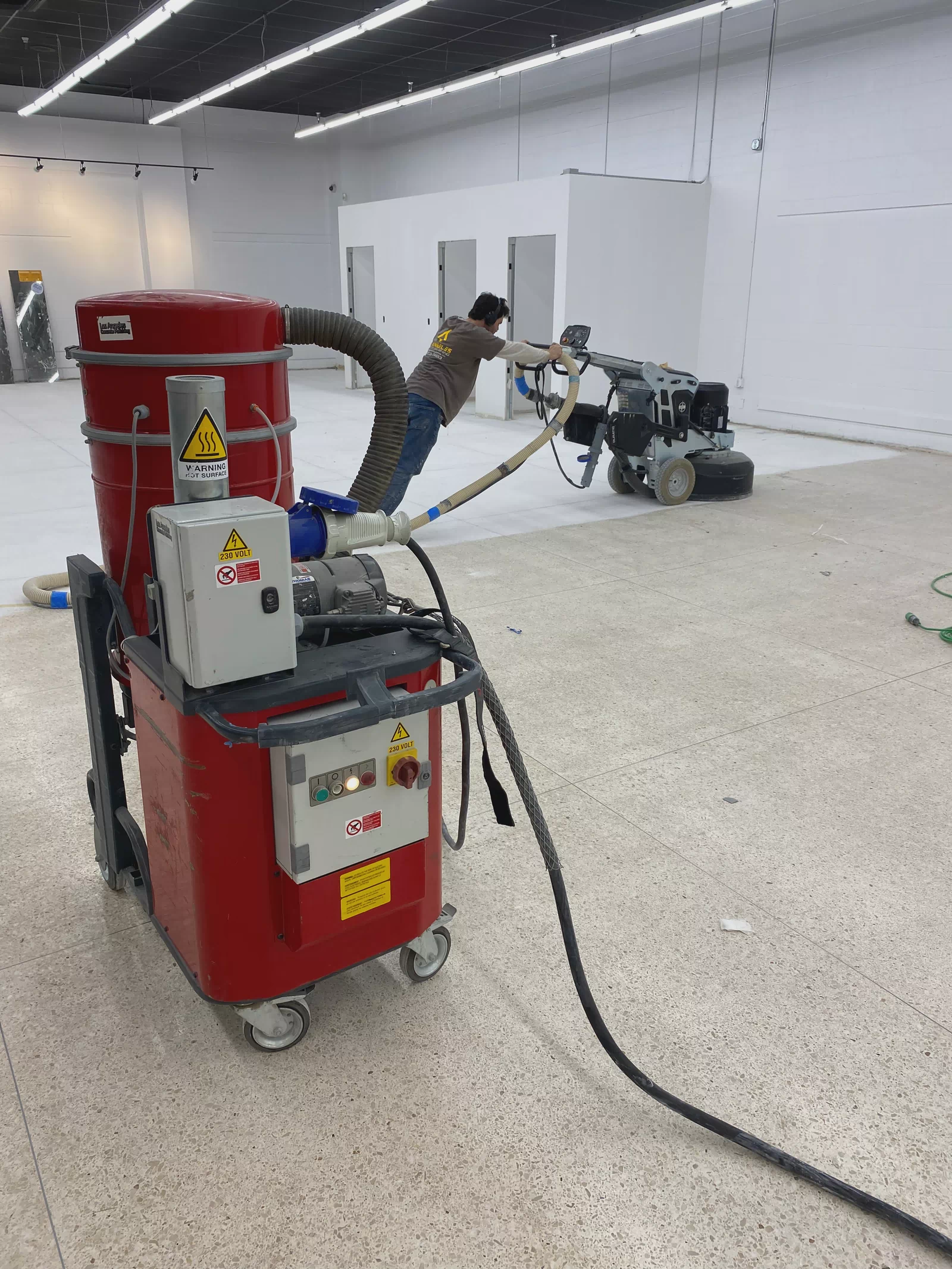
What Goes Wrong on Industrial Dust Collectors and HEPA Vacuums
We see the same failures repeat on jobsite dust extractors, pulse-jet collectors and high-vacuum HEPA units. Knowing what to look for lets us diagnose quickly and quote accurately.
Clogged, Damaged or Improperly Seated Filters
Cartridges and sock filters can become saturated, torn or seated poorly in the tube sheet. A damaged gasket seat lets dust bypass the media entirely.
Failed or Bypassed HEPA Filters
A HEPA filter that is torn, wet, saturated or not locked into its frame can allow fine dust to pass. We inspect the seal, the frame and the downstream side.
Collapsed or Leaking Hoses and Ducts
Hoses crush, ducts crack at joints, and fittings pull loose. Any leak before the filter loads the motor with dirty air and kills suction at the tool.
Worn or Seized Blower and Turbine Motors
Motors overheat, bearings seize, and turbine vanes wear from abrasive dust. We test winding health, bearing condition and impeller integrity.
Failed Pulse-Jet Solenoids, Boards and Clogged Valves
A dead solenoid, a failed control board, or a clogged pulse valve lets cartridges cake up. We trace the control signal and clean or replace the valves.
Gaskets, Casters, Frames and Lids
Damaged gaskets and seals cause bypass. Bent frames, cracked lids and broken casters make the unit hard to move and easy to damage further.
Other common issues include worn impellers and blower bearings, electrical and control faults, blocked inlet and drop-out components, and damaged inlet fittings. If you are not sure what is wrong, ship the collector or the vacuum head to Santa Fe Springs and we will diagnose it.
Dust Collector and Dust Extractor Repair Work
We repair the collector, not just swap the filter. Here is the work that goes into a typical industrial dust collector repair.
Airflow and Suction Diagnosis
We test suction at the tool inlet, check pressure drop across the filter stage, and listen for motor or impeller problems before any parts are ordered.
Filter and HEPA Service
Cartridge, sock and HEPA filter replacement, seal inspection, frame cleaning, and reassembly so each stage seats correctly.
Blower and Motor Repair or Replacement
Motor testing, bearing service, impeller balancing, and replacement when the turbine or motor is beyond repair.
Pulse-Jet and Solenoid / Control Repair
Solenoid testing, control board repair or replacement, valve cleaning, timer setup and line tracing.
Seal, Gasket, Hose and Duct Repair
Gasket replacement, hose repair or replacement, duct patching, and leak tracing through the whole air path.
Electrical Repair and Operational Testing
Control wiring, switches, cord sets, strain relief, overloads and final run testing after reassembly.
We also service inlets, drop-out chambers, caster and frame damage, and lid and latch problems. Every unit leaves the bench only after it has been powered on, run, and checked for leaks and abnormal noise.
Dust Collector Brands We Service
We service the dust collection and extraction equipment that runs alongside concrete grinders, scarifiers, shot blasters and floor scrapers. The list below is a sample of what we work on, not an exclusive lock-in.
If you do not see your brand, call us. We service all makes and models of dust collectors, vacuums and dust extractors used in surface preparation work.
How to Get Your Dust Collector Repaired
Drop off in the Los Angeles area or ship from anywhere in the country. We coordinate freight both ways for contractors outside Southern California.
Call or Request Service
Describe the symptoms: suction loss, noise, pulse failure, or known damage. We will tell you whether to ship the whole unit or just the motor/head assembly. Read more about our process on the How It Works page.
Bench Diagnosis and Quote
We inspect the filter stages, blower, pulse system, seals and electrical controls, then send a quote. We do not start work without approval.
Repair, Test and Return
After repair we run the unit, check for leaks and abnormal noise, and ship it back or hold it for local pickup. Parts carry the manufacturer's warranty; our workmanship warranty is 90 days.
Local service covers Santa Fe Springs, Los Angeles, Orange County, the Inland Empire and San Diego. Need parts while the collector is in the shop? See our parts page.
Suction Down or Filter Bypassing on a Jobsite?
Speak with our Santa Fe Springs service bench or request service now. We repair industrial dust collectors, dust extractors, pulse-jet collectors and HEPA vacuums for surface preparation contractors.